भारत में 12वीं कक्षा के बाद हजारों छात्र ऐसे professional courses की तलाश करते हैं जो कम फीस में उपलब्ध हों और भविष्य में रोजगार के अवसर प्रदान करें। Low fees professional courses वे शैक्षणिक कार्यक्रम हैं जो किसी विशेष कौशल, तकनीकी ज्ञान या व्यावसायिक योग्यता प्रदान करते हैं और जिनकी वार्षिक फीस सामान्यतः ₹50,000 से कम होती है।
यह आर्टिकल उन छात्रों के लिए उपयोगी है जो सीमित बजट में quality education प्राप्त करना चाहते हैं, विभिन्न कोर्स विकल्पों को समझना चाहते हैं, और अपनी शैक्षणिक योग्यता के अनुसार सही दिशा में जानकारी खोज रहे हैं।
About Low Fees Professional Courses
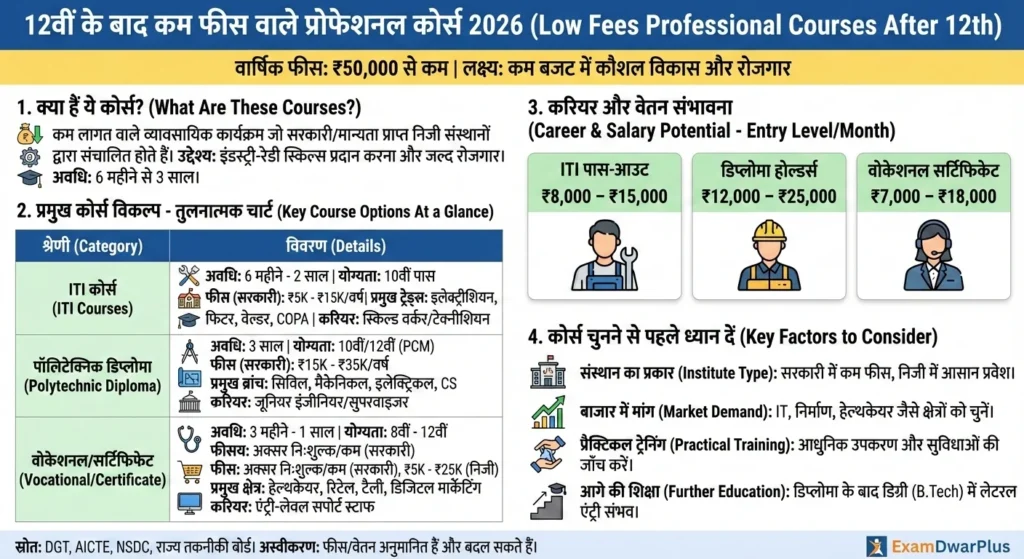
Low fees professional courses का अर्थ है वे व्यावसायिक शिक्षा कार्यक्रम जो सरकारी संस्थानों, पॉलिटेक्निक कॉलेजों, आईटीआई केंद्रों, और कुछ मान्यता प्राप्त निजी संस्थानों द्वारा न्यूनतम शुल्क पर संचालित किए जाते हैं। इन कोर्सों की अवधि सामान्यतः 6 महीने से 3 वर्ष तक होती है।
इन courses का मुख्य उद्देश्य छात्रों को industry-ready skills प्रदान करना होता है ताकि वे शिक्षा पूरी करने के तुरंत बाद नौकरी के लिए योग्य बन सकें। भारत में technical education और skill development को बढ़ावा देने के लिए सरकार द्वारा विभिन्न योजनाएं चलाई जाती हैं जो इन कोर्सों को किफायती बनाती हैं।
इन courses में ITI trades, Diploma in Engineering, vocational courses, certificate programs, और विभिन्न skill-based training programs शामिल हैं। ये कोर्स 10वीं या 12वीं के बाद किए जा सकते हैं और विभिन्न sectors में रोजगार के अवसर प्रदान करते हैं।
Key Facts at a Glance
- Fee Range: ₹5,000 से ₹50,000 प्रति वर्ष (संस्थान के प्रकार पर निर्भर)
- Duration: 6 महीने से 3 वर्ष तक
- Eligibility: 10वीं या 12वीं पास (कोर्स के अनुसार)
- Main Institutions: ITI, Polytechnic, Government Vocational Centers
- Key Sectors: Engineering, Healthcare, IT, Agriculture, Hospitality
- Job Prospects: Technician, Assistant, Operator, Support Staff roles
- Scholarships: SC/ST/OBC/EWS categories के लिए विभिन्न छात्रवृत्तियां उपलब्ध
| Parameter | Details |
| Course Types | ITI Trades, Diploma, Vocational Courses, Certificate Programs |
| Average Annual Fee | ₹10,000 – ₹40,000 (सरकारी संस्थानों में) |
| Admission Process | Merit-based / Entrance Test / Direct Admission |
| Career Level | Entry-level, Skill-based positions |
| Further Education | Diploma के बाद Degree में lateral entry संभव |
Detailed Breakdown of Course Categories
Industrial Training Institute (ITI) Courses
ITI courses भारत में सबसे किफायती professional training programs में से हैं। ये courses Directorate General of Training (DGT) के अंतर्गत संचालित होते हैं और विभिन्न technical और non-technical trades में प्रशिक्षण प्रदान करते हैं। Course duration सामान्यतः 6 महीने से 2 वर्ष तक होता है।
सरकारी ITI संस्थानों में वार्षिक फीस लगभग ₹5,000 से ₹15,000 के बीच होती है। निजी ITI में यह ₹20,000 से ₹40,000 तक हो सकती है। Popular trades में Electrician, Fitter, Welder, Computer Operator, Plumber, और Mechanic शामिल हैं।
| Trade Category | Duration | Approx. Fee (Govt) |
| Electrician | 2 years | ₹8,000 – ₹12,000 |
| Fitter | 2 years | ₹7,000 – ₹11,000 |
| COPA | 1 year | ₹5,000 – ₹10,000 |
| Welder | 1 year | ₹6,000 – ₹10,000 |
Polytechnic Diploma Courses
Polytechnic diploma courses 3 वर्षीय technical education programs हैं जो engineering और applied sciences के विभिन्न branches में प्रदान किए जाते हैं। ये courses 10वीं या 12वीं के बाद किए जा सकते हैं। Government polytechnic colleges में admission merit या entrance exam के आधार पर होता है।
सरकारी polytechnics में वार्षिक फीस सामान्यतः ₹15,000 से ₹35,000 के बीच होती है। Popular branches में Civil Engineering, Mechanical Engineering, Electrical Engineering, Computer Science, और Electronics शामिल हैं। Diploma करने के बाद छात्र Junior Engineer या Technician पदों के लिए योग्य होते हैं।
| Branch | Entry Level | Annual Fee Range |
| Mechanical Engineering | 10th / 12th | ₹18,000 – ₹32,000 |
| Civil Engineering | 10th / 12th | ₹16,000 – ₹30,000 |
| Computer Science | 10th / 12th | ₹20,000 – ₹35,000 |
| Electronics & Communication | 10th / 12th | ₹19,000 – ₹33,000 |
Government Vocational Training Courses
Vocational training courses विभिन्न सरकारी योजनाओं जैसे Pradhan Mantri Kaushal Vikas Yojana (PMKVY), National Skill Development Corporation (NSDC), और राज्य सरकार के skill development centers के माध्यम से उपलब्ध होते हैं। इनमें से कई courses बिल्कुल निःशुल्क या न्यूनतम शुल्क पर प्रदान किए जाते हैं।
इन courses में Healthcare, Beauty & Wellness, Hospitality, Agriculture, Retail, और Construction जैसे sectors शामिल हैं। Course duration 3 महीने से 1 वर्ष तक हो सकता है। कई programs में stipend या placement assistance भी प्रदान की जाती है।
Read Also: 2026 में 12th Commerce के बाद बेस्ट करियर ऑप्शन्स
Short-term Certificate Programs
विभिन्न universities और skill training centers द्वारा 6 महीने से 1 वर्ष की अवधि के certificate programs चलाए जाते हैं। इनमें Tally, Basic Computer Applications, Digital Marketing basics, Spoken English, DTP (Desktop Publishing), और Office Automation जैसे courses शामिल हैं। इन courses की फीस सामान्यतः ₹5,000 से ₹25,000 के बीच होती है।
Employment & Salary Expectations
Low fees professional courses करने के बाद employment opportunities मुख्य रूप से entry-level और skill-based positions में होते हैं। Starting salary course type, industry sector, geographical location, और candidate की practical skills पर निर्भर करती है।
ITI pass-outs के लिए शुरुआती वेतन सामान्यतः ₹8,000 से ₹15,000 प्रति माह होता है। Diploma holders ₹12,000 से ₹25,000 प्रति माह की उम्मीद कर सकते हैं। Experience और additional certifications के साथ यह बढ़ सकता है। Vocational course graduates का वेतन sector और job role के अनुसार ₹7,000 से ₹18,000 प्रति माह तक हो सकता है।
| Qualification | Job Position Type | Starting Salary Range |
| ITI Certificate | Technician / Operator | ₹8,000 – ₹15,000/month |
| Diploma | Junior Engineer / Assistant | ₹12,000 – ₹25,000/month |
| Vocational Certificate | Sector-specific roles | ₹7,000 – ₹18,000/month |
यह ध्यान देना आवश्यक है कि placement की गारंटी किसी भी course में नहीं होती। Employment prospects candidate की practical skills, interview performance, और उस समय के job market conditions पर निर्भर करते हैं। Private companies, government PSUs, contractors, और self-employment विभिन्न employment options हैं।
Factors Affecting Course Selection & Outcomes
किसी भी low fees professional course का चयन करते समय कुछ महत्वपूर्ण factors को समझना आवश्यक है। ये factors course fee, placement outcomes, और career growth को प्रभावित करते हैं।
संस्थान का प्रकार: सरकारी संस्थानों में fee structure काफी कम होता है लेकिन admission में competition अधिक होता है। निजी संस्थानों में fees अधिक होती है पर admission आसान हो सकता है।
Geographic Location: Metropolitan cities में course fees और living expenses दोनों अधिक होते हैं। Tier-2 और Tier-3 cities में यह सामान्यतः कम होता है।
Industry Demand: कुछ sectors में skilled workers की demand अधिक होती है जिससे job opportunities बेहतर होती हैं। Construction, Manufacturing, IT support, और Healthcare sectors में consistent demand रहती है।
Infrastructure & Equipment: जिन संस्थानों में modern equipment और practical training facilities होती हैं, वहां के students को job market में preference मिलती है।
Scholarship Availability: SC/ST/OBC/EWS categories के students के लिए विभिन्न state और central government scholarships उपलब्ध हैं जो financial burden को कम करती हैं।
Apprenticeship Opportunities: कई courses के साथ apprenticeship programs जुड़े होते हैं जहां training के दौरान stipend भी मिलता है और job की संभावना बढ़ती है।
Read Also: 12वीं के बाद बिना ग्रेजुएशन बेस्ट करियर विकल्प 2026
Basic Eligibility & Entry Requirements
विभिन्न low fees professional courses के लिए eligibility criteria अलग-अलग होते हैं। यहां सामान्य entry requirements दी गई हैं।
| Course Type | Minimum Qualification | Age Limit |
| ITI (Engineering Trades) | 10th Pass | 14-40 years |
| Diploma (After 10th) | 10th with Math & Science | Generally no upper limit |
| Diploma (After 12th) | 12th (PCM for Engineering) | Generally no upper limit |
| Vocational Courses | 8th to 12th (varies) | Scheme specific |
Admission process अधिकतर संस्थानों में merit-based होती है। कुछ राज्यों में polytechnic के लिए entrance exam आयोजित किए जाते हैं। ITI में सामान्यतः direct admission या simple entrance test होता है।
Common Confusions Students Have
Low fees का मतलब low quality नहीं: कई छात्रों को लगता है कि जो courses कम fees में उपलब्ध हैं वे quality में कमजोर होंगे। वास्तव में, government-funded institutions professional standards maintain करते हैं और उनकी fee structure subsidy के कारण कम होती है।
Diploma और Degree में अंतर: Diploma 3 वर्षीय technical education है जबकि Engineering degree 4 वर्षीय होती है। Diploma holders lateral entry से degree में admission ले सकते हैं। दोनों के career paths और salary structures अलग होते हैं।
ITI और Diploma दोनों अलग हैं: ITI trade-specific skill training देता है जो 6 महीने से 2 वर्ष का होता है। Diploma broader technical education है जो 3 वर्ष का होता है। ITI pass-outs skilled workers बनते हैं जबकि diploma holders technician या junior engineer level पर काम करते हैं।
Placement guarantee नहीं होती: कई छात्र सोचते हैं कि course पूरा करने के बाद automatically नौकरी मिल जाएगी। वास्तविकता यह है कि placement candidate की skills, market conditions, और personal efforts पर निर्भर करती है।
सभी trades में equal demand नहीं: कुछ ITI trades जैसे Electrician, Fitter, और COPA में demand अधिक होती है जबकि कुछ traditional trades में opportunities सीमित हो सकती हैं। Job market research करना आवश्यक है।
Private institutes की fees vary करती है: सभी low fees courses सरकारी संस्थानों में ही नहीं होते। कुछ registered private institutions भी reasonable fees पर courses offer करते हैं, लेकिन इनकी recognition verify करना जरूरी है।
Frequently Asked Questions
क्या ITI करने के बाद government job मिल सकती है?
हां, ITI pass-outs Railways, Defence, PSUs और विभिन्न government departments में technician posts के लिए apply कर सकते हैं।
Low fees courses में scholarship मिलती है?
हां, SC/ST/OBC/EWS categories और economically weaker sections के लिए central और state government scholarships उपलब्ध हैं।
क्या diploma करने के बाद engineering degree में admission हो सकता है?
हां, diploma holders lateral entry scheme के through B.Tech के second year में admission ले सकते हैं।
Private ITI और Government ITI में क्या फर्क है?
Government ITI में fees बहुत कम होती है और NCVT certification मिलती है। Private ITI की fees अधिक होती है लेकिन अगर NCVT affiliated हैं तो certificate equally valid होता है।
Vocational courses करने के बाद कौन से sectors में jobs available हैं?
Healthcare, Retail, Hospitality, Construction, Agriculture, Beauty & Wellness, और IT support जैसे sectors में opportunities होती हैं।
क्या ये courses distance mode में available हैं?
ITI और Diploma courses सामान्यतः regular mode में ही होते हैं क्योंकि इनमें practical training mandatory है। कुछ certificate programs online या distance mode में उपलब्ध हो सकते हैं।
Source & Reference
Reference Source: इस article की जानकारी Directorate General of Training (DGT), AICTE, National Skill Development Corporation (NSDC), और विभिन्न राज्य सरकार के technical education boards की publicly available information पर आधारित है।
इस जानकारी को शैक्षणिक स्पष्टता के लिए मूल स्रोत के आधार पर अपने शब्दों में समझाया गया है। Fee structures, course details, और employment data सामान्य जानकारी के उद्देश्य से प्रदान किए गए हैं और ये संस्थान, location, और समय के अनुसार बदल सकते हैं।
Conclusion
Low fees professional courses भारत में 12वीं के बाद उन छात्रों के लिए व्यावहारिक विकल्प हैं जो सीमित बजट में technical या vocational education प्राप्त करना चाहते हैं। ITI, Polytechnic diploma, vocational training programs, और certificate courses विभिन्न sectors में entry-level employment opportunities प्रदान करते हैं।
इन courses का चयन करते समय fee structure, course duration, eligibility criteria, industry demand, और institution की credibility जैसे factors को समझना आवश्यक है। सरकारी संस्थानों में admission competitive होता है लेकिन fee बहुत कम होती है और scholarship options भी available हैं। Final decision लेने से पहले course details, placement records, और अपनी career goals को ध्यान में रखना जरूरी है।
Disclaimer: ExamDwarPlus यह जानकारी केवल शैक्षणिक और सामान्य सूचना के उद्देश्य से साझा करता है। किसी भी अंतिम निर्णय से पहले मूल स्रोत या आधिकारिक वेबसाइट से जानकारी सत्यापित करना आवश्यक है।
